
Street photography starts with noticing a scene, choosing a background, and waiting for a gesture that makes the frame worth keeping. A simple camera setup helps, but your position and treatment of people matter just as much.
Use this guide for a focused walk, then review the photographs as a sequence. The contact-sheet example below is published work by Eric Kim; the field exercises are suggestions for your own practice.
Start with observation before shooting
Find a corner, doorway, patch of light, sign, reflection, or repeated pattern. Watch how people move through it before raising the camera. Stay somewhere you can observe without blocking a pavement, entrance, or crossing.
Ask yourself:
- Where is the light coming from, and where does it fall?
- Which background lets a subject stand out?
- Where do people naturally pause or gesture?
- Is a color, shadow, or shape repeating?
- Can I make the frame without crowding someone?
If the scene has potential, wait a few minutes. Compose the background first and notice what changes when someone enters it. Move on if staying would obstruct people or make them uncomfortable.
Keep the camera simple and ready
Choose a setup you can operate without searching through menus. You can practice with a phone or the camera you already know; a new lens is not a prerequisite.
- One camera and a familiar lens: learn what fits in the frame from a comfortable distance.
- Exposure settings suited to the scene: check a sample for motion blur, lost highlights, and subject visibility. Decide whether you want movement frozen or deliberately blurred.
- A familiar focusing method: use one that follows movement reliably for you, or focus on a predictable position and wait. Review whether the subject is actually sharp.
- A considered shutter mode: a quiet option may be useful where appropriate, but silence does not make intrusive photography acceptable. Check your camera's instructions and actual results before relying on an unfamiliar mode.
- A secure strap or grip: keep the camera ready without swinging it into other people.
- Battery and storage capacity: carry a spare battery and card for a longer walk, or check the phone's available space.
Keep the kit light enough that you can watch the street instead of managing equipment. Recheck exposure when you move between bright sunlight and shade.
Work with light, shadow, and layers
Look for side light, reflections, silhouettes, window glow, and shadows that give an ordinary scene structure. A bright background behind a shaded face creates a different problem from a lit subject against a dark doorway. Make a sample and check the part of the image that matters to your idea.
Build depth with three possible layers:
- Foreground: a window edge, doorway, or passing figure that frames the scene.
- Middle: the person, gesture, sign, or interaction you want noticed first.
- Background: architecture, traffic, posters, or weather that explains the setting.
You do not need all three in every photograph. If the layers overlap confusingly, shift position or wait for a gap. Check whether a sign or pole appears to grow out of someone's head and whether a bright edge pulls attention away from the subject.
Choose a clear subject
Before pressing the shutter, finish the sentence: “This photograph is about…” The answer might be:
- A gesture, such as a hand reaching for an object.
- A face or silhouette.
- A color match between a person and their surroundings.
- A contrast between people and place.
- A quiet moment in a crowded area.
- A repeating shape or pattern.
If you cannot identify the subject, simplify. Step sideways, change height, wait for separation, or leave out a distracting edge. Avoid changing your position in ways that block someone or draw them into an unwanted interaction.
Use timing instead of constant shooting
A glance, step, or hand movement can change the meaning of a frame. Watch for:
- Feet separating during a stride.
- Hands interacting with objects.
- Eye contact between people.
- A subject entering a patch of light.
- A reflection lining up with the person or object it reflects.
- A sign or shape making a useful connection with the subject.
A short burst can give you alternatives, but inspect what actually changed. Several exposures of an unchanged scene do not automatically make a stronger photograph.
Read a real contact sheet
Eric Kim's published contact sheets include this Hanoi sequence of Cindy wearing a hat. It is a portrait interaction, not evidence that a photographer should secretly follow strangers. The sheet and selected photograph are reproduced unchanged under his published reuse permission.
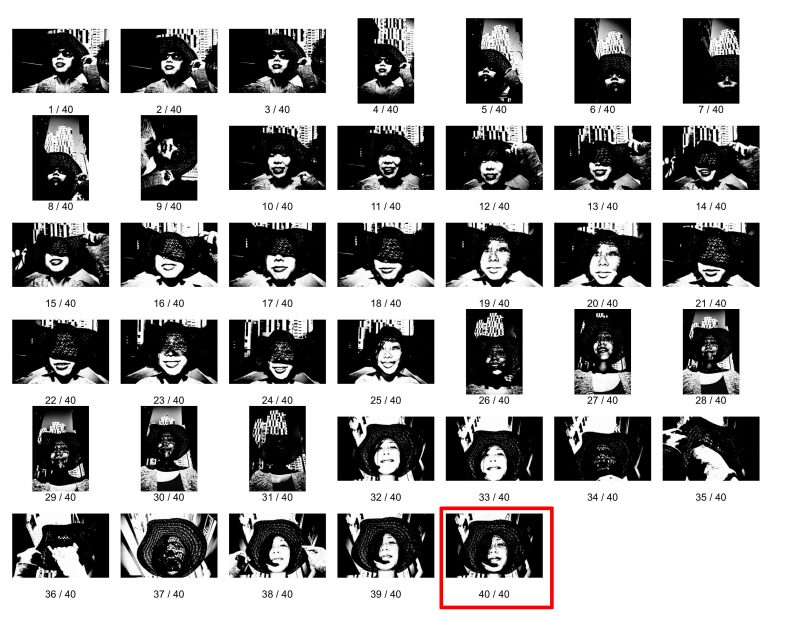
Use the printed frame numbers to compare three changes:
- Frames 19–20: facial visibility. Much of the face is bright, while the hat remains dark. Compare these with the darker face in frame 21; exposure and the face's position under the hat affect what you notice first. The sheet alone does not establish which camera settings changed.
- Frames 32–33: gesture and framing. The hand appears beside the raised brim and the face tilts upward. Compare that gesture with frame 34, where the brim hides much of the face. A small change in position can substantially change the subject's readability.
- Frames 39–40: choosing between near matches. The source marks frame 40. Compare the eyes, mouth, hand, and spaces around the hat before deciding which you prefer. The marked frame is Kim's selection, not an objective rule that the last exposure must be best.
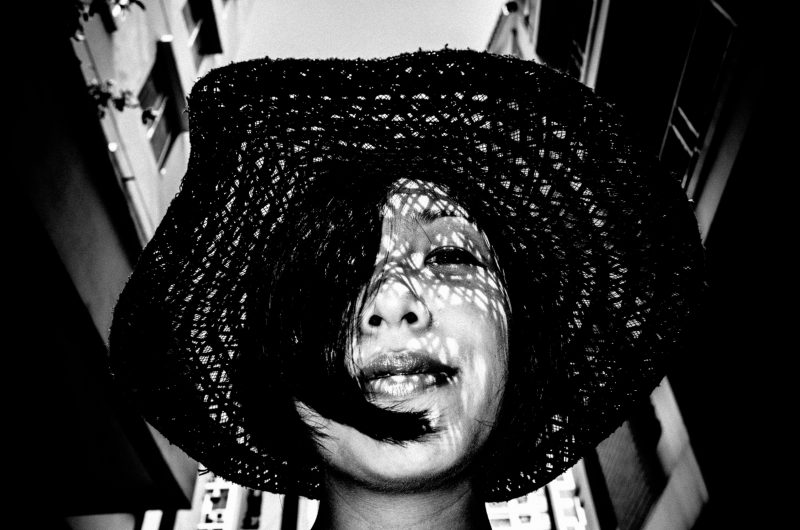
For your own work, place a few neighboring frames together and write one reason for your selection. Record visible changes in gesture, overlap, light, or background rather than assuming you know an unseen subject's thoughts. Apply the same comparison to the photographs from your own walk.
Respect people and the situation
Being able to see someone in public does not settle every question about photographing or publishing them. Personal comfort, venue restrictions, privacy, and the intended use all deserve attention. Be especially cautious around children, grief, medical situations, or people who may be vulnerable.
- Do not block movement or entrances.
- Do not follow someone who wants to leave or continue after a clear refusal.
- Avoid humiliating or exploitative framing and captions.
- Be prepared to explain your purpose calmly; ask before an extended portrait interaction.
- If someone objects to a photograph, stop and discuss a reasonable response. Do not treat deleting files as a universal legal requirement or a substitute for understanding your obligations.
- Check the rules that apply to the location and intended use, especially on private property, in transit facilities, at events, or for advertising.
Decide about publication separately from taking the picture. An agreement to a portrait does not automatically cover every promotional use. For a sensitive or commercial project, seek appropriate local guidance before publishing identifiable people. A gallery password cannot resolve those decisions.
Try repeatable street photography exercises
Choose one constraint per walk and one question to answer during the review. These are suggested exercises, not tested performance targets.
| Exercise | What to do | What to review |
|---|---|---|
| One corner | Observe one safe, unobstructive position for a short session; 20 minutes is an optional starting point | Which background and gesture combinations were worth waiting for? |
| One color | Look for a recurring dominant color | Does the color connect the subject to the setting, or merely repeat? |
| Light patch | Watch a patch of light and photograph when the subject and background fit your idea | Did the subject fall where you expected, and is the important detail visible? |
| Reflections | Use windows, puddles, or mirrors without entering unsafe positions | Can the viewer distinguish the reflection from the scene beyond it? |
| Gesture hunt | Concentrate on hands, posture, or movement | Which frame makes the action clear without a speculative caption? |
For the one-corner exercise, keep a small sequence of alternatives rather than only your favorite. Compare an empty background, a subject entering it, and a later gesture if those moments occur. Do not manufacture an interaction to complete the exercise.
Edit street photos with restraint
Adjust exposure, contrast, crop, and color to clarify the photograph. Keep an original file and make the edits on a separate version. For documentary work, follow the publication's rules on alterations; adding or removing people or objects changes more than the presentation of a moment.
During editing, check:
- Is the subject easy to find?
- Does the crop remove a distraction without removing important context?
- Are shadows and highlights consistent with the scene you intend to show?
- Does black and white strengthen the image, or hide a weak color relationship?
- Are neighboring selections genuinely different, or repetitions of the same idea?
Use the photo editing masterclass for a broader editing workflow. Keep captions factual: distinguish what the frame shows from what you learned separately.
Build a sequence, not only single images
A street set can show a neighborhood, route, event, or theme. Look for connections through:
- Similar colors.
- Repeated gestures.
- Weather and mood.
- Architecture and scale.
- Movement through the same place.
- Contrasts between quiet and busy moments.
Try an opening photograph that establishes the setting, a closer image that develops a gesture or detail, and a closing photograph that changes the pace. This is a possible editing structure, not a required three-image formula. Remove a strong individual photograph if it repeats an earlier frame without adding to the set.
Write accurate captions and avoid implying that images from different places or times show one continuous event. A gallery delivery page can present the selected project for collaborators or a publication; the sequence and context still depend on your editing choices.
Protect downloads when sharing early edits
Before sharing, decide who should see the work and whether you have resolved the relevant publication and permission questions. Do not upload a sensitive set merely because a password is available.
SendPhoto's download control lets you decide whether visitors have gallery download options, and password protection adds a password requirement to shared access. These controls do not stop every copy, screenshot, or onward sharing. Turning downloads off does not recall files already obtained.
For a review, explain which filenames or versions you want feedback on and whether the images are provisional. Keep the private review decision separate from permission to publish or use an identifiable person's image in advertising. Find more editing and delivery guidance on the SendPhoto blog.
Street photography checklist
Before you go:
- Pick a neighborhood, route, or constraint.
- Pack light.
- Set up a camera response you understand.
- Check batteries and storage space.
- Dress for walking and the weather.
While shooting:
- Watch the light before choosing a subject.
- Build a background that supports the idea.
- Wait for gestures and useful alignment.
- Respect personal space and refusals.
- Move on when a situation feels wrong or your position obstructs others.
After shooting:
- Cull for meaning rather than volume.
- Sequence related images without misleading context.
- Edit consistently and preserve the originals.
- Compare neighboring frames and note why one works better.
- Share only after considering the audience, subjects, and intended use.
On your next walk, choose one exercise and bring back a small set you can explain. A useful review ends with a specific observation, such as a clearer gesture or a cleaner background, that you can look for again.