
Introduction
Good food photography makes the viewer understand texture, freshness, temperature, and flavor before they read a caption. The fastest improvements usually come from light direction, angle choice, cleaner styling, and shooting before the food loses its shape.
These food photography tips are written for practical shoots: restaurant menu updates, chef portraits with dishes, recipe content, social campaigns, and small product-style food scenes.
Use Light That Shows Texture
Start with side light when you want texture. Light closer to the camera can reduce visible shadows; back or side-back light can emphasize translucent drinks and glossy surfaces. The useful direction depends on the dish, background and intended mood. Compare the actual scene instead of treating one direction as a rule.
Place the dish near a window or large soft light. If shadows get too heavy, add a white card opposite the light. If the food looks too flat, try black foam board on the shadow side to reduce reflected fill. Keep cards and stands clear of hot food and stable on the set.
Quick lighting starting points
| Dish type | Light direction | What to inspect |
|---|---|---|
| Pasta, salads, bowls | Side light | Ingredient separation and visible surface texture |
| Drinks, soups, glossy sauces | Back or side-back light | Reflections, glare and translucent edges |
| Burgers, cakes, stacked food | Low side light | Layers without losing important shadow detail |
| Flat plates and boards | Overhead with side light | Ingredient layout and shadows across the surface |
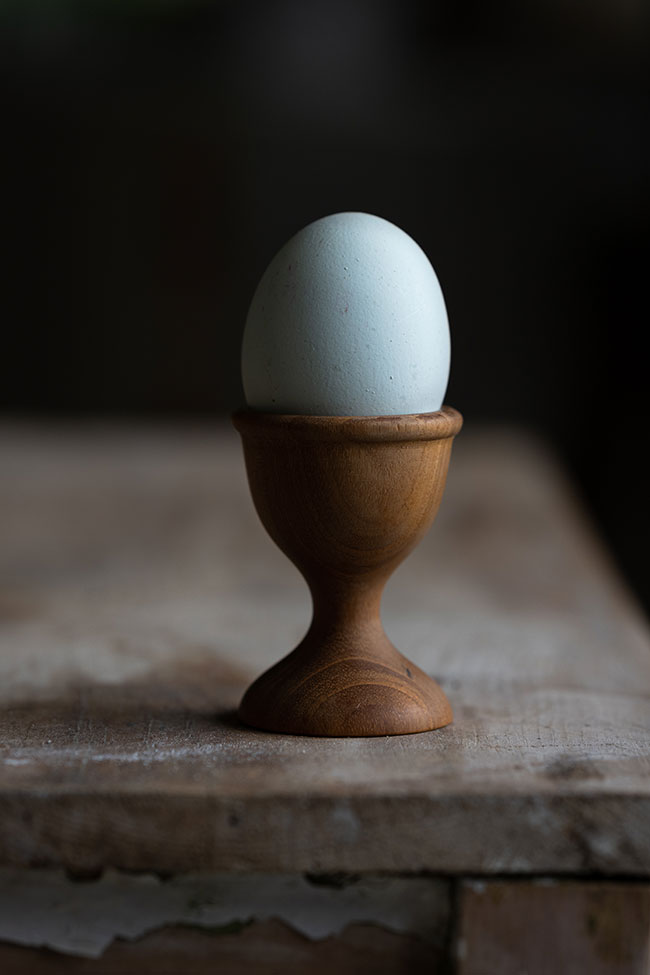
The egg makes a useful reference because its simple shape lets you examine the transition into shadow. Notice that the darkest background also separates the bright edge. Nikon identifies the example as side-lit; the photograph alone does not establish an exact light position, exposure or reflector arrangement.
Pick the Angle Based on the Food
Do not choose an angle because it is trendy. Choose it because it explains the dish.
Overhead
Overhead works for pizza, boards, bowls, table spreads, salads, pastries and flat plates when ingredient placement is the main story. It is useful for several dishes in one frame, but hides the height of a burger or layered cake. Use a secure, compatible overhead support and follow its load instructions; avoid balancing on a chair to reach the view. Our flat-lay guide covers composition and support precautions.
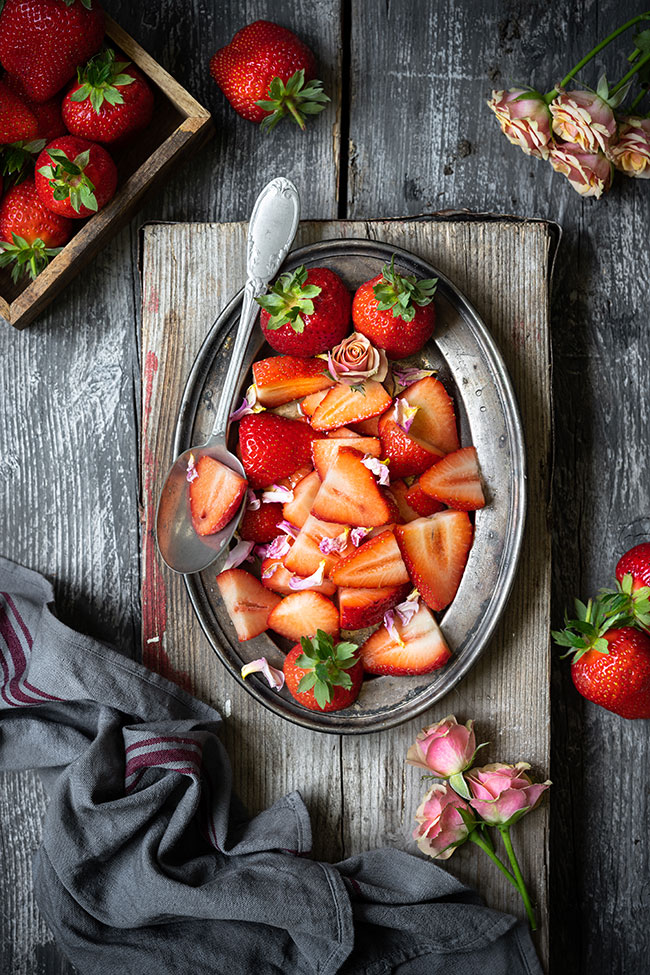
This view makes the fruit distribution easy to see. The roses, spoon and cloth remain secondary to the red strawberries. Treat it as a composition example, not a restaurant serving suggestion or evidence that decorative flowers are edible.
45 degrees
An angle around 45 degrees is flexible for plated entrees, desserts, drinks, and restaurant dishes because it feels close to how someone sees food at a table.
Straight-on
Use straight-on compositions for tall foods: burgers, sandwiches, layered cakes, stacked pancakes, parfaits, and drinks with garnish.
Macro or close detail
Use close detail shots for texture: salt on chocolate, bubbles in a drink, crisp edges, herbs, sauce, crumbs, or steam. These are useful secondary images for galleries and social posts.
Compare one dish before plating the hero
Try this proposed exercise with a stand-in plate while the final food stays in the kitchen. It is a workflow to perform yourself, not a test result from this article.
- Choose a fixed window or soft light and keep the dish, props and camera fixed relative to one another.
- Compare light from near the camera, the side and behind the plate by repositioning the setup relative to the source. Keep brightness comparable and note glare, texture and lost shadow detail.
- With your preferred light direction, photograph overhead, at roughly 45 degrees and straight-on. Compare which view explains the ingredients and height.
- Check focus on the hero ingredient. Adjust aperture and focus placement to include the required layers; a wide aperture can blur useful detail.
- Lock in the setup, then bring in the fresh hero dish and capture the essential frames first.
For steam, pouring or hands, choose a shutter speed appropriate to the movement. A tripod steadies the camera but does not freeze a moving subject. There is no single shutter speed or aperture that fits every dish.
Style for Freshness, Not Perfection
Food should look intentional, but not lifeless. A perfect plate can feel fake if every crumb is removed. The best styling keeps the hero dish clean while leaving small signs of real food.
Styling checklist
- Wipe plate edges before shooting.
- Add garnish at the last moment.
- Keep sauces glossy and controlled.
- Use props that match the restaurant, brand, or recipe.
- Avoid props that compete with the dish color.
- Keep napkins and cutlery slightly imperfect.
- Replace wilted greens, melted toppings, or collapsed foam quickly.
For restaurants, ask the kitchen to prepare backup garnish and extra hero ingredients. For recipe work, prep surfaces, props, and camera settings before the final dish is plated.
Control Color
Food color is sensitive. A wrong white balance can make greens look gray, meat look dull, or sauces look unnatural. Choose one consistent light source where possible; daylight mixed with warm room lights can create different color casts across the plate. If possible, photograph a neutral reference under the same light, then set white balance before heavy editing. A reference frame helps judge color but does not make an uncalibrated screen or print perfectly accurate.
Use complementary colors sparingly. Green herbs can lift creamy dishes. Blue or gray surfaces can make warm food stand out. Red and orange foods can become overpowering if the background is also warm.
Shoot Tethered or Review Often
Food changes quickly. Tethering to a laptop or tablet helps the photographer, chef, stylist, and client see problems before the dish is gone. If tethering is not available, review key frames on the camera screen and zoom in to check focus, shine, and plate edges.
Capture four dependable variations before experimenting: one clean hero frame, one closer detail, one wider context image and one vertical composition for social use. Check the client's actual dimensions before framing; a banner and a portrait post may need separate photographs rather than aggressive crops.
Editing Food Photos
Edit food to look appetizing and believable. Start with exposure and white balance, then refine contrast. Use local adjustments to guide attention to the hero ingredient. Avoid over-saturation, especially with greens, reds, and oranges.
Sharpen texture where it matters: crispy edges, garnish, seeds, crumbs, bubbles or grill marks. Check for halos at the final export size. Keep plates and backgrounds clean, while preserving the appearance of the actual dish. Retouching should not add ingredients or change serving size in a way that misrepresents what the client sells.
For social delivery, see the social media photography tips. For mobile-first shooting ideas, the iPhone cinematic photography guide may help with light and framing. For export decisions, use the photo resolution guide.
Delivering Food Images to Clients
Restaurant and brand clients often need several crops: website banners, menu thumbnails, delivery-app images, social posts and print files. Ask for each destination's current dimensions, file limits and color requirements before export. Name files by dish and usage, and confirm the approved serving, crop and retouching with the client. Organize a gallery by usage so the client can find the right version.
SendPhoto's gallery delivery can present food images in a client gallery. Its download controls let you configure download availability and quality. Label proofs clearly and keep unapproved work out of a final-delivery gallery when necessary: placing files in different collections is organization, not a guarantee that viewers cannot see or copy them. Agree separately on advertising usage, publication permission and which files are final.
FAQ
What is the best light for food photography?
Soft side light is a useful starting point for texture. Compare back or side-back light for translucent drinks and shiny surfaces, watching glare and dark fronts. The dish and your intended mood determine the choice.
How do I make food photos look more professional?
Choose the angle based on the food, simplify props, control white balance, style for freshness, and review the image before the dish changes.
Should I use fake food styling tricks?
For restaurant menus and recipe content, use the actual ingredients and serving so the photograph represents the dish. Keep decorative or non-food materials separate from food intended to be eaten. A client's approval alone does not establish compliance with applicable advertising rules; agree on styling and retouching limits and check the requirements for the intended publication. This guide does not provide jurisdiction-specific legal advice.