
This romantic photography guide focuses on planning a couple session around their comfort, chosen gestures and sharing boundaries. Use it to decide the mood, location, light, pacing, frame variety, editing and delivery before reaching for a longer pose list.
The suggested sequence below is a planning example, not a documented client shoot or a promise of spontaneous expressions. A quiet, no-touch portrait is as valid a choice as a playful or affectionate one.
Start With the Couple, Not the Pose List
Before planning shots, learn what kind of romantic images the couple actually wants. Some couples want quiet and intimate. Some want playful and energetic. Some want editorial, cinematic, casual, or family-centered.
Ask simple questions:
- Where will these photos be used?
- Are they engagement, anniversary, wedding-adjacent, maternity, elopement, or personal portraits?
- Do they prefer private moments or lively prompts?
- Are there locations that matter to them?
- Are there boundaries around touching, public posing, or image sharing?
Write down the agreed mood, any no-touch or no-public-sharing requests, and the intended deliverables. Check again on the day: either person can decline a prompt or change their mind. Participation, posing and publication are separate decisions.
Choose a Location That Gives You Options
Choose a location with useful light, comfortable footing and room for the chosen poses. Privacy depends on the place and time; a public street, park or café does not become private because the frame looks quiet.
Useful location types:
- Quiet street with shade and texture.
- Park path with open shade.
- Beach or lakeside near the edge of the day.
- Home session with window light.
- Coffee shop, bookstore, studio, or meaningful indoor space.
- City steps, archways, courtyards, or simple walls.
Confirm access and photography rules with the owner or organizer where needed, including shops, studios, farms and event venues. Choose level walking routes away from traffic, water edges and drops, and use a stable seat when sitting is planned. A tighter crop hides bystanders from the picture but does not remove them from the session. If the couple feels watched, offer a genuinely quieter permitted spot or an indoor alternative.
For engagement-specific planning, see engagement photo ideas.
Use Light That Flatters Connection
Choose the light for the mood the couple requested. Soft, warm or contrasty light can all work; none proves that a portrait is more romantic. Check both faces, important hands and clothing before repeating a pose.
| Light Type | Best Use | Watch Out For |
|---|---|---|
| Open shade | Less direct-sun contrast on faces | Background may be brighter; reflected surroundings can affect color |
| Window light | Quiet indoor connection | Direct sun may be hard; mixed room lights can affect color |
| Backlight | Glow, hair light, silhouettes | Faces can become underexposed |
| Side light | Shape and mood | Shadows can become too heavy |
| Overcast light | Even outdoor coverage | Direction and background still matter; add contrast only if it suits the brief |
If faces are too dark, try changing their angle to the light or adding fill, then inspect another frame. Low-angle sun can be warm and still cast hard shadows. A large nearby window may give a gentler transition unless direct sun hits the subject. Check both eyes and the brighter clothing, especially when one person faces a different direction. Add foreground or background separation when the scene needs depth; do not assume a reflector fixes every exposure.
Direct Body Language in Small Steps
Give one clear cue at a time and show or describe the option before asking them to try it. Confirm that both people want the proposed contact before every touch-based setup. Do not physically adjust someone’s hair, clothes or posture without asking. Offer a no-touch version and let them stop without explaining.
Choose from these optional connection points:
- Foreheads close only if both want it; looking toward each other without contact is an alternative.
- Hands linked, or hands resting naturally at each person’s side.
- One partner behind the other with both faces visible; an embrace is optional.
- Shoulder or waist contact when invited by both people.
- Walking side by side.
- Sitting on a stable seat, with a comfortable gap or optional shoulder contact.
- One partner looking at the other while the other looks away.
Then add movement:
- Walk side by side on a clear route; skip shoulder bumps if unwanted or unsteady.
- Share a lighthearted comment if they enjoy that kind of prompt; a quiet pause is also useful.
- Adjust a sleeve or hair only if the person being touched agrees.
- Move a little closer by agreement, without pulling or surprising the other person.
- From a stationary position, turn slightly away, then look back together.
- Walk to an agreed marker and stop before looking back; holding hands is optional.
Movement can give variety, but it does not guarantee better expressions. A still pose may suit the couple or their access needs better. Check that neither person’s face is obscured and choose enough depth of field for both faces at their actual distances.
Use Prompts That Create Real Reactions
Offer prompts that fit their agreed boundaries. Contact, compliments, personal stories and dancing are optional; avoid asking for private details or treating a smile as proof of comfort. Photographer Dezerae Jobe describes asking couples about their relationship in Adobe’s engagement posing guide. Adapt the question to the couple rather than expecting the same reaction.
Try prompts such as:
- “Walk side by side as if leaving dinner; hold hands if you both want to.”
- “If you feel like sharing, tell your partner something you appreciated when you first met.”
- “Stand at a comfortable distance and both look at the view.”
- “Stand where you feel comfortable; pause, then look toward me when ready.”
- “Give them a quiet compliment if you would like, or simply look toward each other.”
- “If dancing is your thing, try a small movement, then stop on the clear posing spot.”
Watch the transition after the cue and take a few frames when expression changes. Check focus and expression before moving on; a laugh, serious look or quiet glance may all fit the agreed mood. Do not keep repeating an uncomfortable prompt for a hoped-for reaction.
Balance Close, Medium, and Wide Frames
A romantic gallery needs variety. If every image is a close-up, the story can feel repetitive. If every image is wide, the emotion can feel distant.
Capture:
- Wide location frames.
- Medium walking or seated portraits.
- Tight frames of faces.
- Hands, rings, clothing details, flowers, or small gestures.
- Individual portraits of each person.
- Quiet in-between moments.
- Vertical and horizontal versions.
Agree which versions they need for prints, announcements or sharing. The following genuine photographs illustrate three framing roles. They are separate published references, not our clients, a single session sequence, or proof of the prompts used. Their publication does not establish another couple’s consent for your shoot.
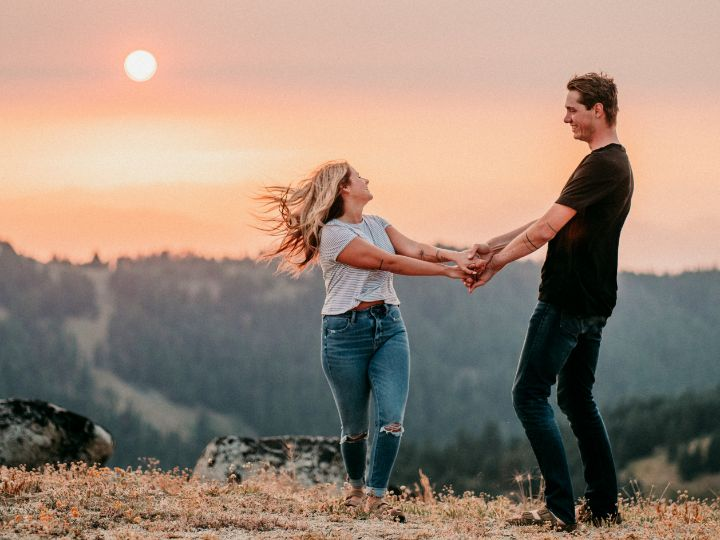
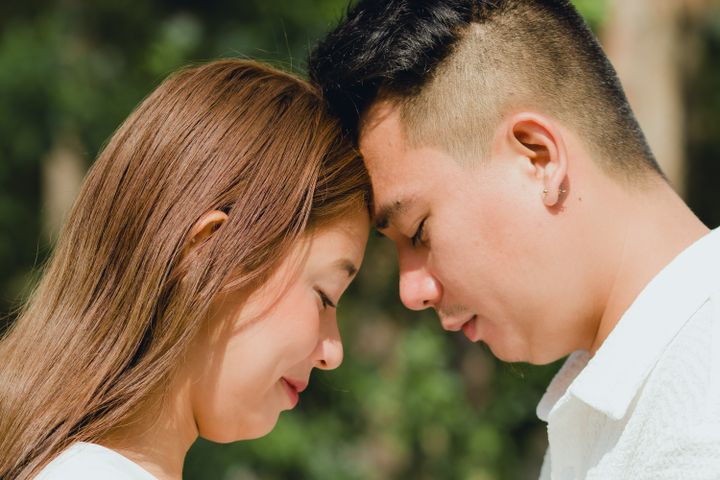
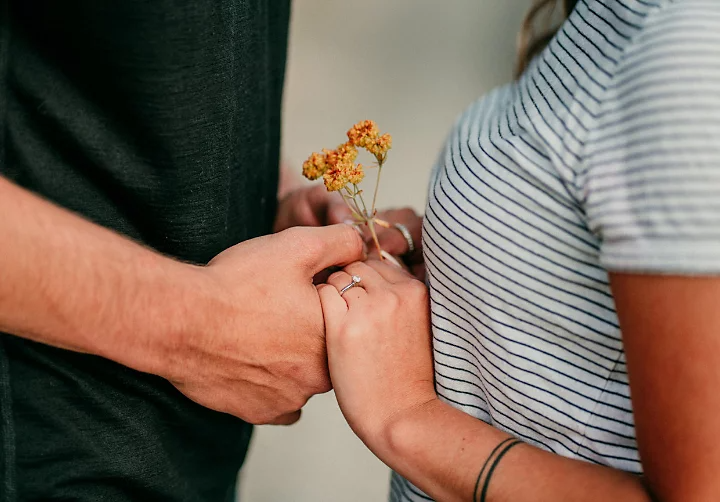
For your own mini-sequence, keep the agreed location and gesture, then try four views: a wide frame for the setting, a medium frame for posture, a close portrait if wanted, and a detail of hands or an accessory. A no-touch version might use side-by-side people, separate portraits and a shared object instead. Review each view for both faces, comfortable hands, edge distractions and the required crop. This is a suggested capture order, not a documented contact sheet.
Keep the Session Pace Calm
Romantic sessions can become uncomfortable if the photographer rushes or over-directs. Give enough direction to prevent awkwardness, then leave enough space for the couple to settle.
A suggested pacing structure, adjusted to their comfort:
- Start with walking or standing prompts.
- Offer seated or closer poses after checking that both people want them.
- Offer playful movement if it fits them; keep a still alternative.
- Offer quiet close frames without requiring touch or personal disclosure.
- End with a simple favorite setup in the best light.
Ask whether a quick preview would help. Showing a frame can clarify the crop or hand position, but neither person has to review every image on set. Allow breaks, warmth and seating as needed; the five stages are not a promised duration or guaranteed number of deliverables.
Respect Privacy and Consent
Romantic photography can include personal gestures, private locations, or sensitive life moments. Set expectations before the session and before delivery.
Discuss:
- What kinds of poses feel comfortable.
- Whether any images should stay private.
- Who can access the gallery.
- Whether images may be shared publicly.
- Whether watermarked previews are useful.
- How final downloads should be handled.
Record participation and publication preferences separately and confirm the actual proposed use before sharing a portfolio post, advertisement or social preview. Requirements depend on location and use; a gallery password does not replace permissions. Do not infer consent from the relationship, an affectionate pose, a favorite selection or a visible smile.
Edit for Warmth Without Overdoing It
Editing should support emotion without hiding the couple. Warm tones, soft contrast, and gentle highlight control can work well, but heavy presets can make skin, clothing, or location details look unnatural.
Editing checklist:
- Keep skin tones believable.
- Match color across the full gallery.
- Avoid crushing shadows in faces.
- Keep whites and highlights controlled.
- Remove small distractions when agreed; ask before changing bodies, scars or other identifying features.
- Preserve natural texture and expression.
For beginner editing basics, read how to edit photos for beginners.
Deliver the Gallery With Care
Agree who receives the gallery, what counts as a review version and which files are final. Collections organize images; they do not by themselves define different viewer permissions. Keep face-visible originals, intimate alternatives or rejected edits out of a wider-audience gallery when they are not intended for those viewers.
Organize the final set into clear collections when helpful:
- Highlights.
- Portraits.
- Walking and movement.
- Details.
- Black and white versions.
- Family or announcement images if included.
SendPhoto’s gallery delivery can present the chosen set in collections. Favorites record preferences, not formal edit or publication approval. Confirm the selected files and permitted uses separately.
Password protection adds an access check, but viewers can forward the link and password or copy an image they can see. Download control enables or disables gallery downloads; it does not create publication permission or recall files already saved. Use separately configured galleries where different audiences need different access, and keep editable masters and independent backups outside the delivery gallery.
Romantic Photography Checklist
Before the session:
- Confirm the mood and purpose.
- Confirm location permission, actual privacy, accessible footing and light options.
- Discuss comfort levels and sharing expectations.
- Plan simple movement prompts.
- Check weather and backup locations.
During the session:
- Start with a comfortable stationary or clear-route walking prompt.
- Direct one body cue at a time.
- Watch hands, shoulders, and distance.
- Capture wide, medium, close, and detail frames.
- Give breaks when the couple gets tense.
- Review focus and expression before changing locations.
After the session:
- Cull for genuine expression.
- Edit consistently.
- Organize the gallery clearly.
- Check the audience, access settings and publication agreement for private images.
- Deliver final downloads in a way the couple can understand.
Common Romantic Photography Mistakes
Avoid:
- Starting with intense poses before the couple is relaxed.
- Giving vague direction like "just be natural."
- Using locations that make the couple feel exposed.
- Shooting every frame at the same distance.
- Overusing warm presets until skin looks unnatural.
- Sending private images without clear access settings.
Assess the result against the couple’s stated preferences rather than assuming that more touch, warmth or laughter makes it better.
Related Guides
For a larger pose vocabulary after agreeing boundaries, read how to pose couples for photography. Browse the SendPhoto photography blog for other planning guides. Engagement concepts, editing and delivery references appear beside their relevant sections above.
FAQ
How do you make romantic photos look natural?
Offer one clear, optional cue that fits their preferences, then watch the transition without requiring a particular expression. A still portrait or no-touch pose may suit them better than movement. Ask again before contact and stop or change the prompt if either person dislikes it.
What is the best light for romantic photography?
Choose the mood first, then inspect both faces. Open shade, a large window and overcast light can reduce hard contrast, but direction and reflected color still matter. Low sun may remain hard; backlight needs a check of face exposure and bright highlights.
What should couples wear for romantic photos?
Clothing should fit the location, feel comfortable, and work together without looking identical. Avoid choices that distract from faces, movement, and connection.
Should romantic photo galleries be private?
Ask the couple who may view the set and which images, if any, may be public. A password adds a check but can be forwarded, and visible images can be copied. Keep access, download settings and publication permission separate; do not promise that a gallery prevents every unwanted disclosure.